
Center-Lock Wheel Knowledge — Los Angeles, California
About Center Locks
A plain-English guide to center-lock wheel systems: what they are, why they exist, how they differ from conventional lug wheels, and what proper service looks like. Written for performance, exotic and luxury vehicle owners across the Los Angeles area.
Serving Southern CaliforniaSince 1972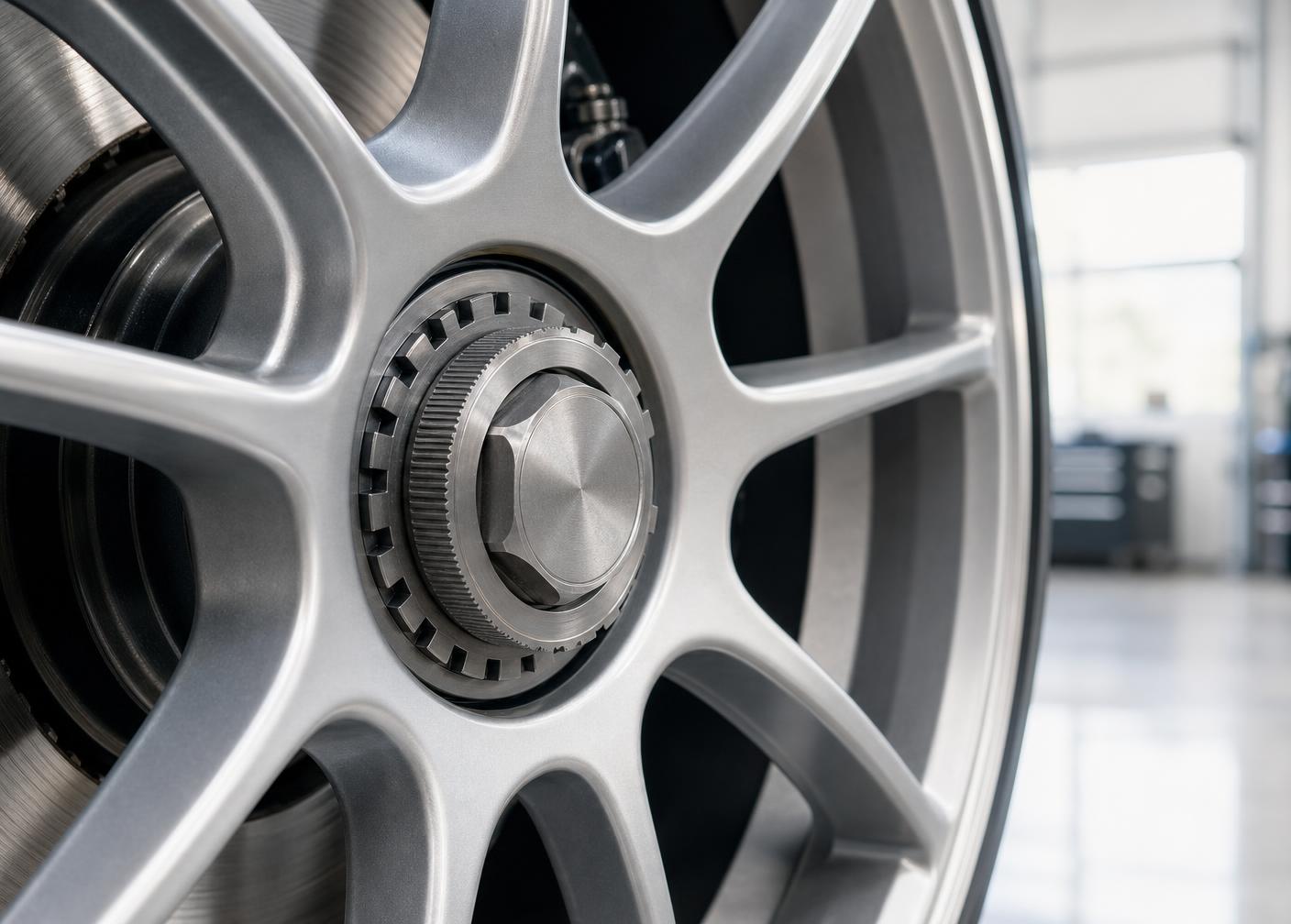
What Is ACenter-Lock Wheel?
A center-lock wheel is held to the hub by one large central fastener instead of four, five or six lug nuts or bolts. The wheel locates on a splined or tapered hub, and a single nut clamps it in place.
The design comes from motorsport, where a pit crew needs to change a wheel in seconds. Manufacturers carried it onto road-going performance cars because it reduces unsprung weight, centers the wheel precisely on the hub and looks unmistakably purposeful.
That single fastener carries every cornering, braking and acceleration load the car generates. It is a proven design — but it leaves no margin for a careless installation, because there is no second fastener sharing the job.
Anatomy Of A Center-Lock System
The Hub & Drive Pegs
Splines or drive pegs transmit torque from the hub to the wheel. They are precision surfaces — damage, corrosion or debris here changes how the wheel seats.
The Center Nut
One large nut clamps the wheel. Many are directional and side-specific, and many are marked for a limited number of reuses before replacement is called for.
Locking & Retention
Depending on the vehicle, retention can involve a locking mechanism, a safety clip or a specific tightening sequence that must be followed exactly.
Mating Surfaces
Clean, correctly prepared contact surfaces are part of the specification. Contamination can affect how clamping load actually develops.
Center-Lockvs. Conventional Lug Wheels
| Aspect | Center-Lock | Conventional Lug |
|---|---|---|
| Fasteners | One large central nut | Four to six lug nuts or bolts |
| Tightening | High clamping load, vehicle-specific procedure and sequence | Moderate load, star pattern |
| Tooling | Dedicated socket, torque multiplication and calibrated equipment | Standard sockets and a common torque wrench |
| Hardware life | Nuts are often service items with replacement guidance | Typically reused indefinitely |
| Margin for error | None — one fastener does all the work | Load is shared across several fasteners |
Requirements differ by manufacturer and by model year. We verify them for the exact vehicle in front of us rather than applying a universal rule.
The Right ToolsAre Not Optional.
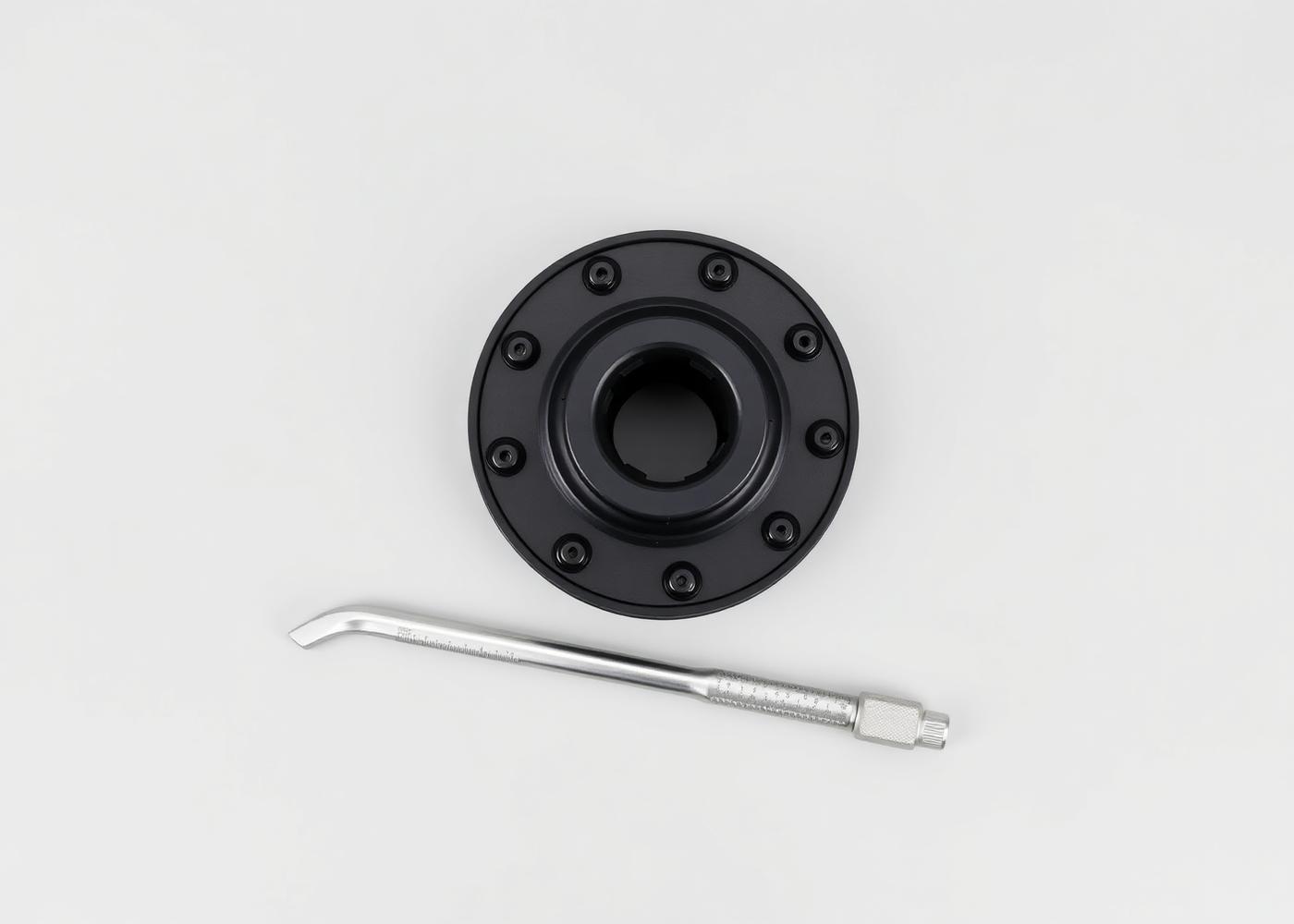
Center-lock service typically calls for a vehicle-specific socket that fits the nut exactly, equipment capable of reaching and controlling a very high clamping load, and calibrated measurement so the result is verified rather than estimated.
An impact gun and a guess are not a substitute. Neither is a torque wrench that has never been checked. Equipment that is out of range or out of calibration can leave a wheel under-clamped or a fastener over-stressed, and neither condition announces itself in the parking lot.
Just as important is what happens around the tools: inspecting hub and wheel surfaces, following the manufacturer's sequence, using the correct preparation on mating surfaces, and re-verifying before the car leaves.
What Goes Wrong When It Is Done Casually
Under-clamped Wheels
Insufficient clamping load can allow movement between the wheel and hub, which damages the very surfaces the design depends on.
Over-stressed Hardware
Guessing high is not safer. Fasteners and hubs are engineered components with limits, and exceeding them can compromise them permanently.
Damaged Hub Splines
Splines and drive pegs are expensive to repair. Once they are scored or worn, a correct installation is much harder to achieve.
Cosmetic Damage
Wrong-fitting sockets mar nuts and wheel faces. On a set of performance wheels, that is a costly mistake for a routine tire change.
For safety reasons we do not publish torque values or step-by-step procedures. Specifications differ by vehicle and are verified for the specific car being serviced.
Center-Lock ServiceIn The Los Angeles Area.
Los Angeles has one of the densest concentrations of center-lock-equipped cars in the country — Sunday canyon runs on Angeles Crest, track days at Willow Springs and Buttonwillow, weekend meets from Malibu to Pasadena, and a lot of very capable cars used as daily drivers.
It also has thousands of tire shops, and only a small number of them are equipped and willing to touch a center-lock wheel. Owners in the San Fernando Valley, the Westside, Pasadena and the San Gabriel Valley routinely call several shops before finding one that will take the job.
Add in LA reality — freeway debris, steep driveways, curbed rims, hot summer pavement chewing through performance tires — and center-lock owners here need tire service more often than most, not less.
- North Hollywood
- Studio City
- Sherman Oaks
- Burbank
- Glendale
- Pasadena
- San Marino
- Arcadia
- Beverly Hills
- Hollywood
- Encino
- Woodland Hills
What Owners Should Know
- Know whether your car actually has center-lock wheels — many models offer them only as an option.
- Ask any shop directly whether they service center-lock systems before you book, not after you arrive.
- Have your year, make and model ready; requirements are vehicle-specific.
- Mention if the wheels have been off recently or serviced elsewhere.
- Keep the vehicle's center-lock tooling and hardware together if it came with any.
- Have your wheels inspected any time you feel a new vibration, noise or steering change.
Center-Lock ConversionKits On The Market.
A number of manufacturers and aftermarket suppliers now offer center-lock upgrade or conversion kits for cars that left the factory with conventional lug wheels. They are popular on track-focused builds, and we see them regularly in the Los Angeles area.
What A Typical Kit Contains
- Center-lock hub adapters that bolt to the existing hub in place of the stock flange
- The large central locking nut for each corner, often side-specific and color coded
- A retention or safety locking mechanism appropriate to the design
- Fresh fasteners and hardware for mounting the adapters
- Center-lock compatible wheels, since standard lug wheels will not fit
- In some cases the specialized socket or tool required for service
What To Weigh Before Buying One
Kit Quality Varies Widely
There is a real difference between an OEM-developed upgrade, a reputable motorsport supplier and an inexpensive online kit. This is a single load-bearing fastener per corner — sourcing matters.
Fitment Is Vehicle-Specific
Hub design, track width, brake clearance and wheel offset all change with a conversion. A kit sold for a similar model is not automatically correct for yours.
Service Requirements Change
Once converted, the car needs center-lock procedures and tooling for every tire change — including roadside and emergency situations.
Street, Track And Legal Use
Some kits are sold for competition use only. Check the manufacturer's intended-use statement, and check with your insurer where relevant.
Documentation Matters
Keep the kit's instructions and specifications with the car. Any shop servicing it later will need the maker's procedure for that exact kit.
Bring It To Someone Who Knows
Whether the kit is factory or aftermarket, installation and periodic inspection should be done by a shop equipped for center-lock work.
Ron's Tire & Wheel can service vehicles fitted with center-lock conversion kits, and can talk through wheel and tire fitment if you are considering one. Bring the kit documentation with you — we work to the specifications published for your specific kit and vehicle rather than a generic procedure.
We do not endorse any particular kit or brand, and we do not publish torque values or installation procedures online. Conversion kits are sold by both vehicle manufacturers and independent suppliers; suitability, safety and legality depend entirely on the specific kit and vehicle.
Why Ron's Tire & WheelIs A Good Choice.
Ron's Tire & Wheel has been serving Southern California motorists since 1972, with three locations across North Hollywood and Pasadena. Center-lock service sits naturally inside a shop that has spent five decades doing wheel and tire work properly.
Est.1972A Real Shop, Not A Website
Three established Los Angeles-area locations, staffed by people who do this work every day.
Specialized Equipment
Center-lock work is handled with the correct tooling and calibrated equipment rather than improvised solutions.
Vehicle-Specific Procedures
We confirm the requirements for your exact year, make and model before the wheels come off.
Fifty Years Of Judgment
Experience shows up in the details — inspection, surface preparation, sequence and final verification.
Tires, Balancing & Alignment
One shop for the whole job, so your car is not shuttled between specialists.
Straight Answers
Tell us what you drive and we will tell you honestly whether we can service it.
Center-Lock Wheels? Let Ron's Handle Them.
Call the location closest to you, or send us your vehicle details and we will confirm service availability. info@rtwmotoring.com
Center-Lock Questions, Answered
This page is general educational information about center-lock wheel systems and is not a service procedure. Manufacturer names, where mentioned, are used descriptively only. Ron's Tire & Wheel is an independent service business and is not affiliated with, endorsed by or sponsored by any vehicle manufacturer.